Denver, CO Heating System: 7 Reasons Your Furnace Isn’t Heating
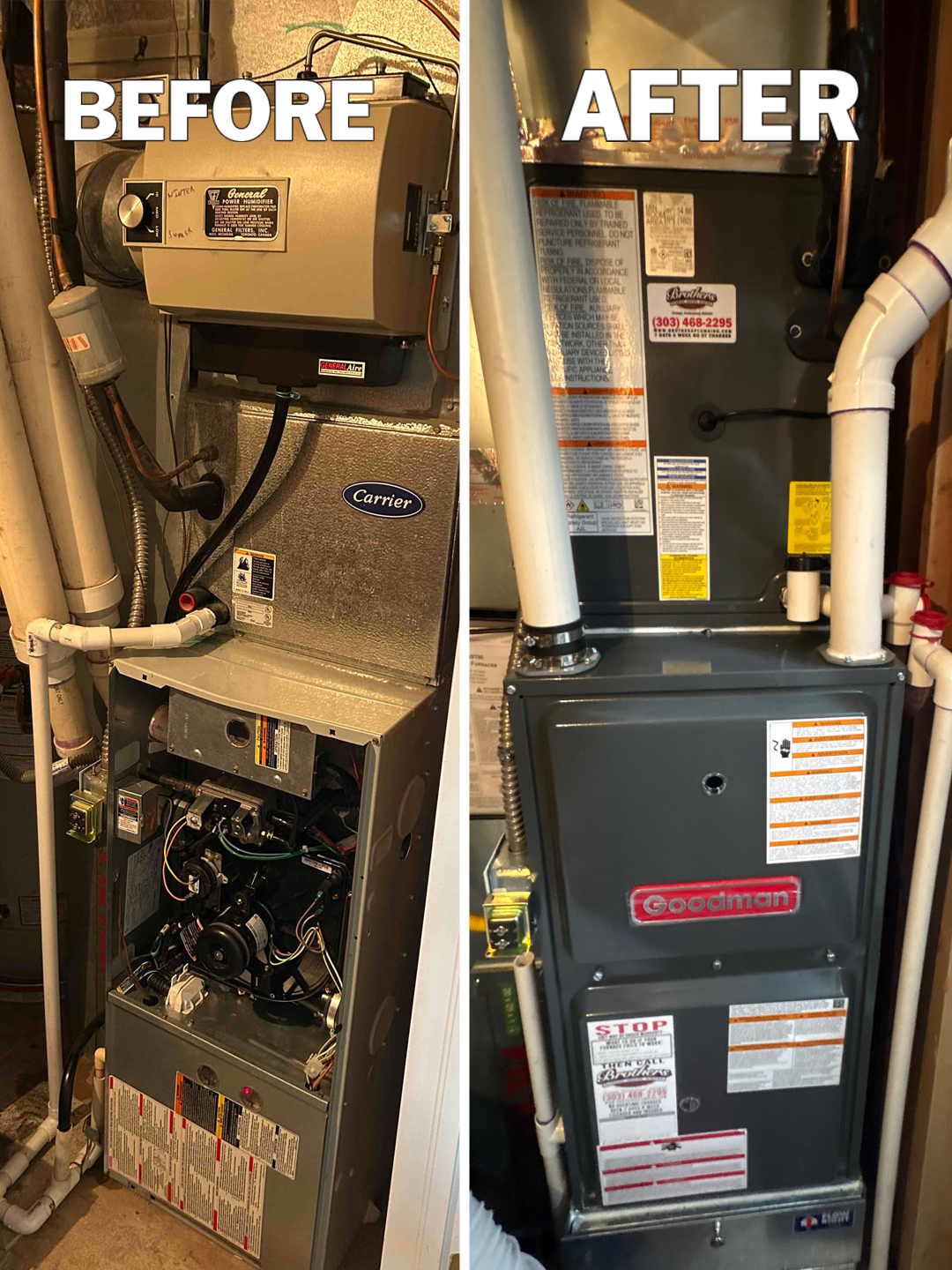
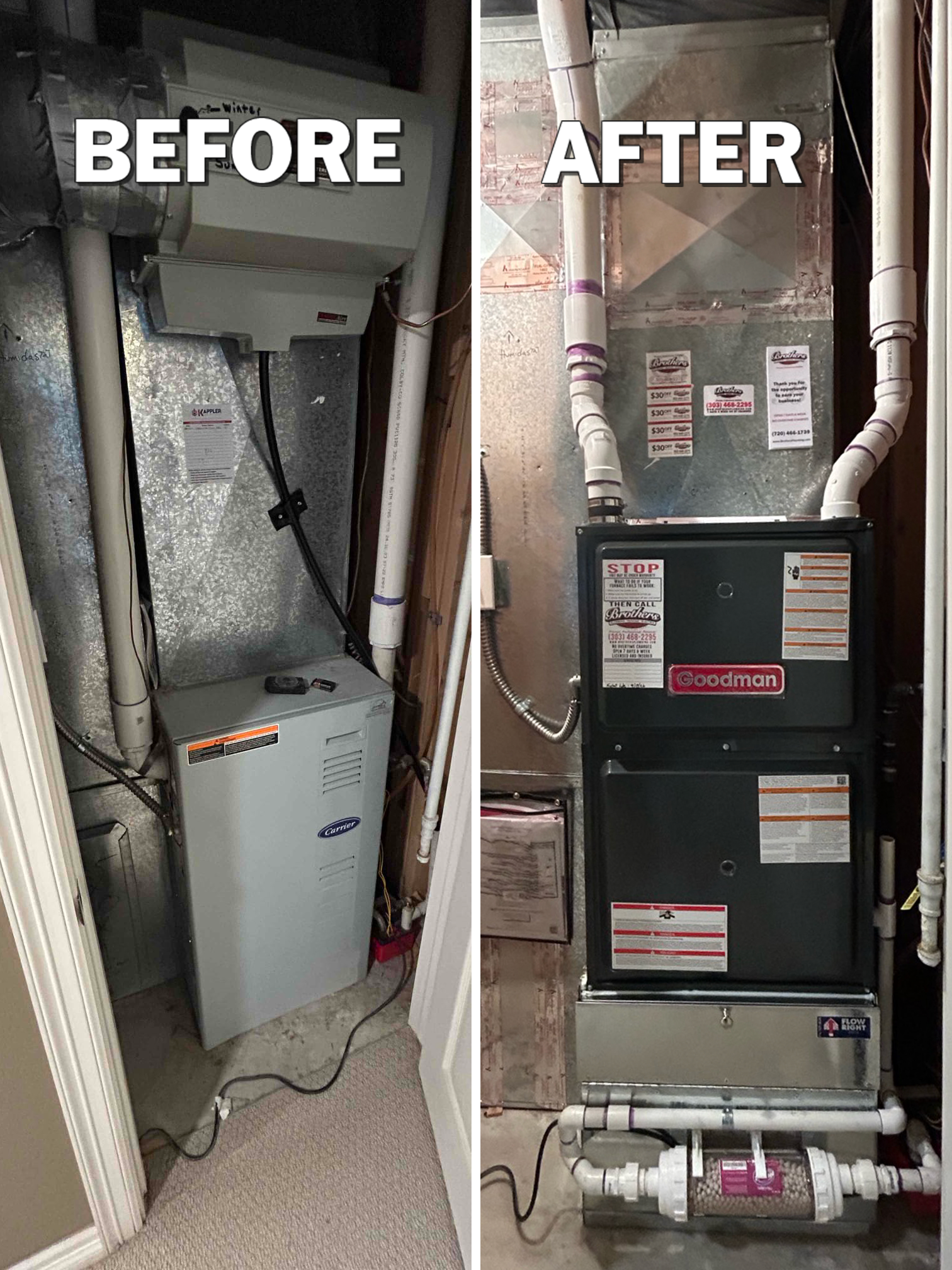
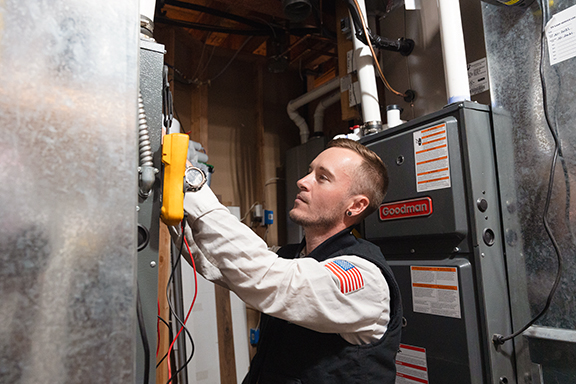
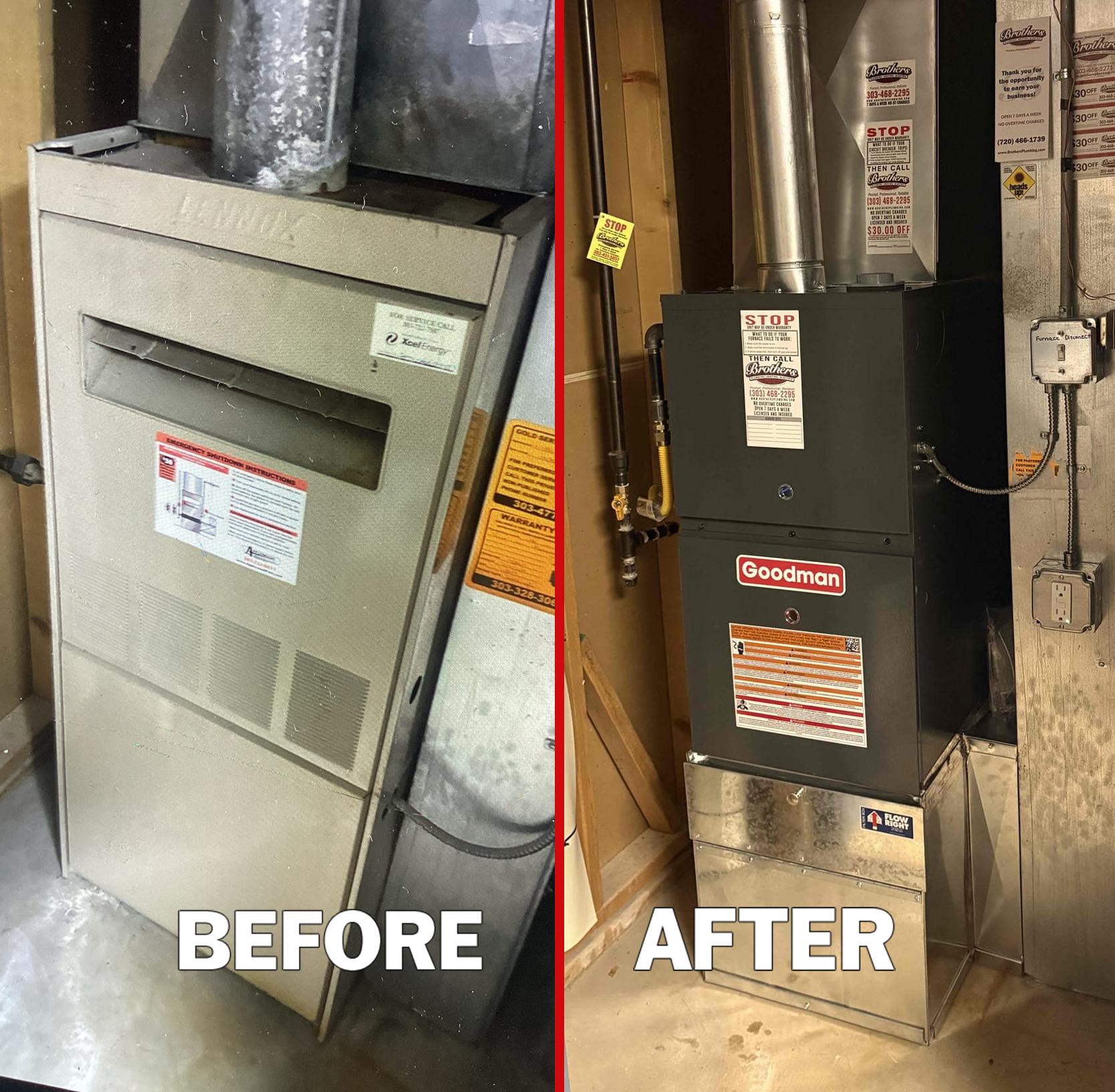
Furnace not heating your home? You’re not alone. When a heating system fails on a cold Denver night, stress spikes fast. This guide covers the top 7 reasons a furnace isn’t heating, what you can safely check, and when to call in a pro. If you’re in Denver, CO or nearby, Brothers offers same‑day furnace repair and 24/7 emergency service to get heat flowing again.
First, Do These Quick Safety and Power Checks
Before you assume a major failure, rule out simple issues:
- Set the thermostat to Heat and raise the setpoint 3–5 degrees above room temperature.
- Check the furnace switch near the unit and confirm it’s ON.
- Inspect the circuit breaker and the furnace’s front panel door switch. Reset a tripped breaker once. If it trips again, stop and call a pro.
- Make sure all supply registers are open and returns aren’t blocked by furniture or rugs.
- Listen for startup: inducer fan, ignitor glow or clicking, and then burner light. No normal sequence usually points to power, control, or safety lockouts.
Local tip: Colorado law requires carbon monoxide alarms in homes with fuel‑burning appliances and attached garages. If a CO alarm sounds, leave the home and call emergency services, then an HVAC professional.
Reason 1: A Dirty or Wrong Furnace Filter
A clogged filter starves airflow, overheats the heat exchanger, and triggers the high‑limit switch to shut burners off. That creates short heating cycles and lukewarm air.
What to do now:
- Replace a 1‑inch filter every 1–3 months and thicker media filters as specified by the manufacturer.
- Use the correct size and MERV. Excessively high MERV without proper design can choke airflow.
- After replacing, restart the furnace. If it heats normally, keep a schedule and set calendar reminders.
When to call: If the furnace still shuts off, a tech should check static pressure, blower speed, and temperature rise against the nameplate.
Reason 2: Thermostat or Smart Thermostat Settings (Denver, CO)
Misprogrammed schedules or wiring issues can block a heat call.
- For smart stats like Nest or Ecobee, confirm the mode is Heat, Eco is off, and hold is engaged during testing.
- If the display is blank, replace batteries or check the C‑wire. Some systems need a common wire or a manufacturer power module.
- Wrong equipment settings can prevent heat calls on two‑stage or variable furnaces.
When to call: If heat works with the old thermostat but not the smart one, the installer must correct wiring, common power, or compatibility.
Reason 3: Tripped Breaker or Furnace Switch Off
Electric issues can mimic bigger failures.
- Reset the breaker once. Frequent trips suggest short circuits, a failing inducer or blower motor, or a control board fault.
- Many furnaces have a light switch nearby that looks like a normal room switch. Verify it’s on.
- Door switch: If the blower door isn’t fully latched, the furnace won’t run.
When to call: If lights on the control board flash an error code, a pro should read the code, test amperage draw, and diagnose the root cause.
Reason 4: Ignition Problems — Hot‑Surface Ignitor, Pilot, or Flame Carryover (Denver County)
If you hear clicking without flame, see an ignitor glow that never lights, or smell gas, ignition could be the issue.
- Hot‑surface ignitor: These are brittle and can crack. Never touch the element with bare fingers.
- Pilot light out: On older furnaces, a dirty pilot orifice or weak thermocouple will kill the flame.
- Flame carryover: Dirty burners prevent flame from moving across all burners, causing a flame sensor fault.
What a tech does: Verify gas pressure, clean burners, check ignitor resistance, and confirm proper microamp readings at the flame sensor. If you ever smell strong gas, leave the home and call the utility or 911.
Reason 5: Pressure Switch or Condensate Drain Issues
High‑efficiency furnaces produce condensate that must drain freely. Any blockage can lock out the furnace.
- Condensate trap or line clog: Water backs up and opens the safety circuit.
- Pressure switch: A restricted intake, flue blockage, or weak inducer prevents the switch from proving draft.
- Freezing: Exterior terminations can ice up during cold snaps.
Homeowner step: Inspect vinyl condensate tubing for kinks and the exterior intake/exhaust for debris. Do not blow into the pressure switch or bypass safeties.
Reason 6: Dirty or Failing Flame Sensor
If the burners light for a few seconds and shut off, the flame sensor may not detect flame.
- Remove and clean gently with a fine abrasive pad. Do not sand aggressively.
- If cleaning doesn’t hold, replacement may be needed.
- Intermittent faults can also point to grounding issues or faulty control boards.
Pro testing: Measure flame rectification microamps. Low readings indicate poor flame signal or grounding.
Reason 7: Overheating, Limit Switch Trips, or Blower Problems (Aurora)
A furnace that starts then stops may be overheating.
- Causes: Dirty filter, blocked return, closed registers, failed blower capacitor, or weak motor.
- Symptoms: Hot supply, cool return, repeated burner shutoff, then a long fan‑only run.
- Fixes: Restore airflow, verify blower speeds, and check temperature rise. Motors and capacitors are pro‑level repairs.
Note on airflow design: Undersized ductwork can keep temperature rise above spec even with a new filter. A technician will measure static pressure and recommend corrections.
Duct Leaks, Closed Dampers, or Zoning Issues
If only some rooms are cold, think distribution.
- Leaky ducts in attics or crawlspaces waste heat.
- Manual dampers left closed after summer can starve branches.
- Zoning panels can fail, keeping a damper shut.
What helps: A pro can smoke‑test, measure CFM, and balance airflow. Sealing accessible duct leaks and correcting damper positions often solves persistent cold spots.
High Altitude Considerations for Denver Homes
At mile‑high elevation, gas appliances often require high‑altitude adjustments.
- Manufacturers like Carrier and Trane provide orifice kits and derate tables to match safe combustion at 5,280 feet.
- Without proper setup, you may see weak flame, nuisance flame‑sensor trips, or poor heat output.
- Smart thermostats can also misread load during sudden temperature swings common along the Front Range.
Ask your tech to verify altitude settings and combustion with a calibrated analyzer.
Repair vs Replace: When It’s Time to Talk Options
Use common decision rules to protect your budget.
- The 50 percent rule: If a repair approaches 50 percent of the cost of a new furnace, consider replacement.
- Age: Most furnaces last 15–20 years with maintenance. Near or beyond that window, invest carefully.
- Efficiency: New high‑efficiency models paired with smart controls like Nest or Ecobee can cut energy use when properly installed and commissioned.
Brothers can present side‑by‑side options with transparent pricing and financing, so you decide without pressure.
Mid‑article CTA: Need fast heat restored in Denver? Call Brothers at (720) 994‑7055 or book at https://www.brothersplumbing.com/. Save $250 on new furnace installation through 2026‑11‑04.
Special Offer
- Save $250 on New Furnace Installation. Use before 2026-11-04.
- Save $1,500 on an AC + Furnace Bundle. Use before 2026-11-04.
- Home Care Club members get 2 free filter changes and 10% off repairs.
Call (720) 994-7055 or schedule at https://www.brothersplumbing.com/ to redeem.
What Homeowners Are Saying
"Chris M. At Brothers came to fix our furnace. He identified the issue and the root cause. During the process he communicated each step and explained how the furnace worked. We had a positive experience and will be contacting Brothers for future HVAC issues." –Chris M., Furnace Repair
"Nathan arrived on time and within an hour replaced parts and had heat running in our house. Very clean and professional! Highly recommend!" –Nathan A., Furnace Repair
"I had recently moved to the area and wanted to find someone to review and maintain the HVAC systems in our 20+ year old home... They had someone perform a full service at my place that same day ... extremely knowledgeable." –Micheal R., HVAC Maintenance
"Gannon inspected our heat pump and water heater for code compliance and safety. He was polite and thorough. I enjoyed talking to him." –Gannon S., System Inspection
Frequently Asked Questions
How often should I replace my furnace filter?
Most 1‑inch filters need replacing every 1–3 months. Thicker media filters follow the manufacturer schedule. If you have pets or allergies, check more often.
What does a blinking light on my furnace mean?
It’s an error code from the control board. Count the flashes and check the code chart inside the furnace door. A technician can read the code and test the failed part.
Do I need carbon monoxide alarms in Denver homes with furnaces?
Yes. Colorado requires CO alarms in homes with fuel‑burning appliances and attached garages. Test monthly and replace units per the manufacturer.
When should I replace instead of repair?
Follow the 50 percent rule. If a needed repair is about half the cost of a new unit, or your furnace is 15–20 years old with frequent issues, consider replacement.
Will a Nest or Ecobee work with my furnace?
Yes, with proper wiring and setup. Many systems need a C‑wire for stable power. Equipment configuration must match your furnace stages and accessories.
Summary
If your furnace isn’t heating, start with safe checks, then work through the seven common causes. For anything involving gas, ignition, condensate, or control wiring, bring in a licensed pro. Brothers restores heat fast in Denver, CO and across nearby cities with same‑day service and 24/7 help.
Schedule Heat Restoration Now
Call Brothers at (720) 994-7055 or book at https://www.brothersplumbing.com/. Mention “$250 OFF New Furnace Installation” before 2026-11-04. We serve Denver, Aurora, Lakewood, Thornton, Arvada, and more across the metro.
About Brothers Plumbing, Heating, and Electric
For 40+ years, homeowners in Denver, Aurora, Lakewood, Thornton, and Arvada have trusted Brothers for honest HVAC, plumbing, and electrical work. We’re BBB accredited, fully licensed, and our technicians hold industry certifications like NATE. You get transparent pricing, options without pressure, and high‑efficiency solutions. Ask about our Home Care Club for priority service, exclusive discounts, and ongoing safety checks.
Sources12
Source links open in a new tab.
- $250 OFF New Furnace Installationbrothersplumbing.com (opens in a new tab)
- $100 OFF Titanium Point of Use Water Filtration Installbrothersplumbing.com (opens in a new tab)
- $1,500 OFF AC and Furnace Bundlebrothersplumbing.com (opens in a new tab)
- 10% Discount on Repairsbrothersplumbing.com (opens in a new tab)
- Happy comment by Daniel Barnettgoogle.com (opens in a new tab)
- Happy comment by Mark Rippsteingoogle.com (opens in a new tab)
- Happy comment by Rae Gronmarkgoogle.com (opens in a new tab)
- Happy comment by Doug Sitkingoogle.com (opens in a new tab)
- Englewood Heating | Heater Repair In Englewood, CObrothersplumbing.com (opens in a new tab)
- Greenwood Village Boilers | Boiler Repair in Greenwood Villagebrothersplumbing.com (opens in a new tab)
- Englewood AC Repair | Air Conditioning Replacement Englewoodbrothersplumbing.com (opens in a new tab)
- Highlands Ranch Boilers | Boiler Repair in Highlands Ranch, CObrothersplumbing.com (opens in a new tab)